Compare WordPress Event Plugins
This comparison hub brings together the most useful alternative pages for buyers researching WordPress event plugins. Instead of chasing feature lists in isolation, you can evaluate what actually matters: front-end submissions, organiser and venue entities, ticketing, moderation, imports, schema, and how expensive the finished stack becomes once you add the extras most event sites need. NexDirectory is strongest when you want one plugin to run the operational side of the site and the search side of the site at the same time.
What smart comparison pages should help a buyer understand
Many comparison pages are little more than sales copy with checkmarks. That approach rarely helps the reader and it rarely earns durable rankings. A useful comparison page should clarify the operating model behind each plugin. Some tools are strongest when a single site owner publishes a polished calendar. Others are built around tickets, appointments, or WooCommerce-first flows. NexDirectory stands out when the site has to behave like a living marketplace with user-generated submissions, moderation, venue pages, organiser pages, discovery archives, and monetisation built into the same system.
That distinction matters for SEO as much as it matters for product fit. If a plugin keeps event data, organiser profiles, venue pages, and supporting content on disconnected add-ons or custom patches, you usually end up with weaker internal linking, thinner archives, and more brittle templates. Comparison content should therefore explain not only which plugin has a feature, but also how much architectural effort is required before that feature becomes part of a coherent publishing system.
How NexDirectory changes the buying conversation
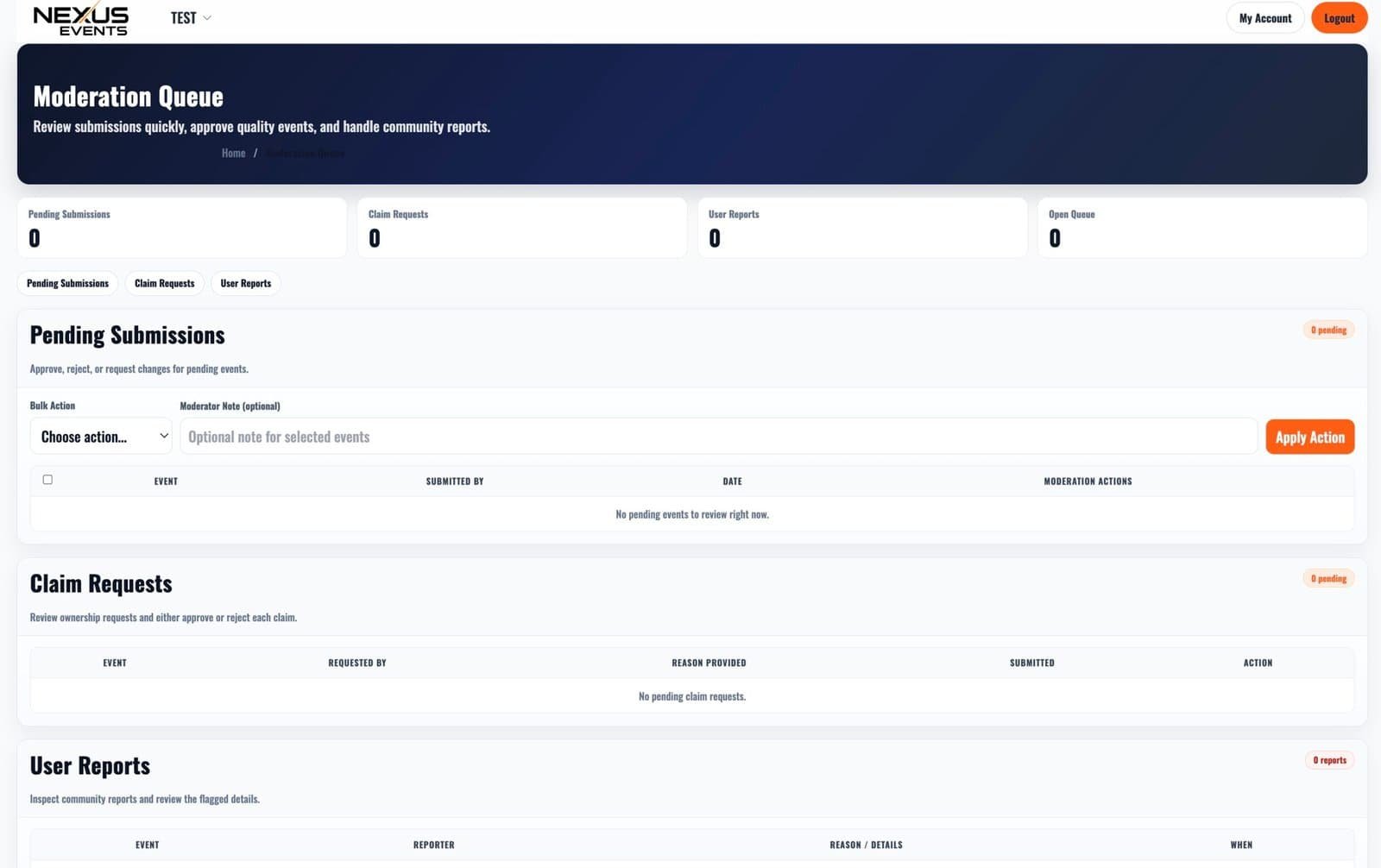
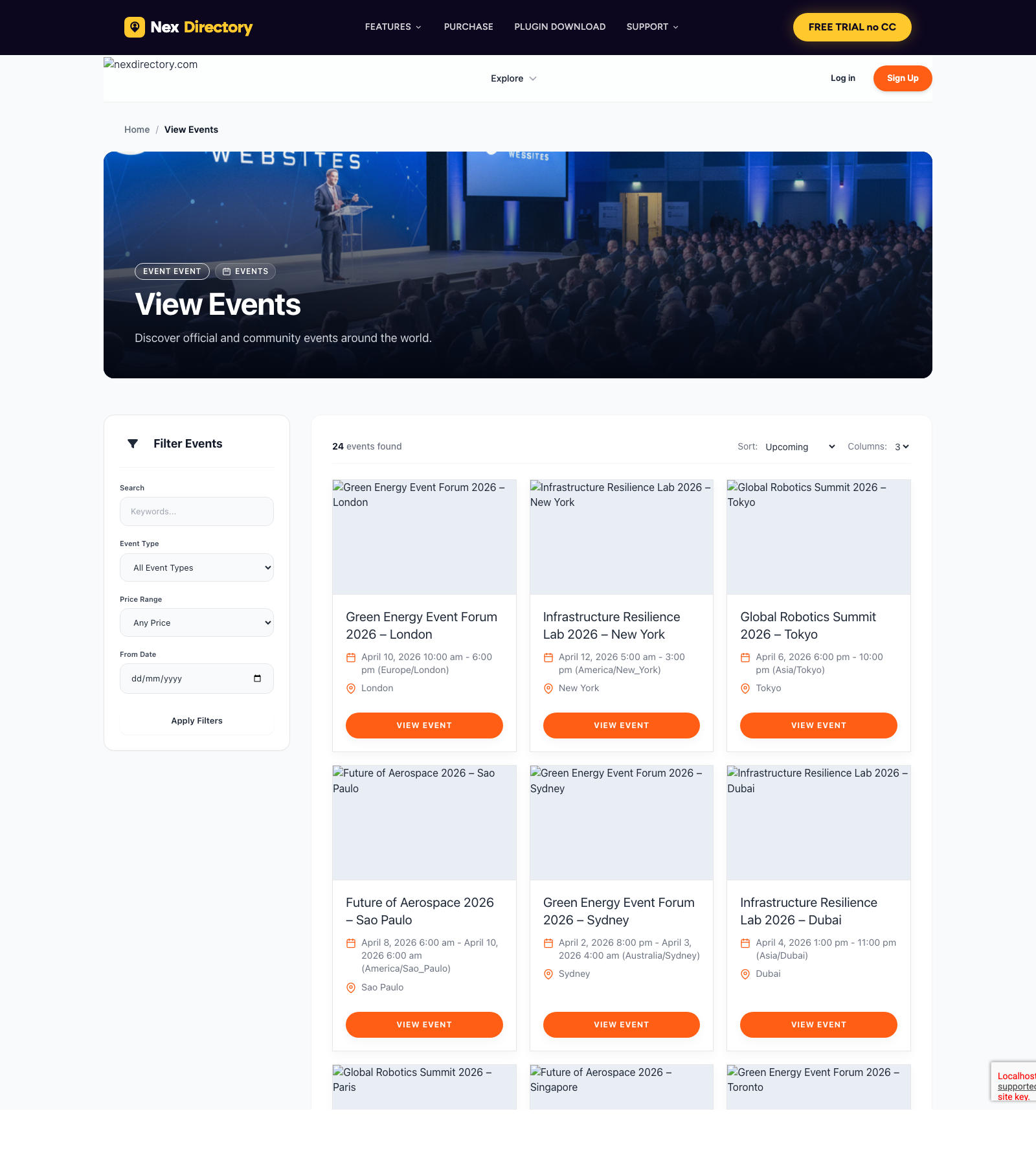
Most plugin evaluations start with a calendar screenshot and end with a stack of add-ons. NexDirectory changes that by giving the buyer a platform narrative immediately: archive pages, map pages, calendar views, front-end submit flows, my-events management, moderation, imports, analytics, and monetisation are all part of the same product story. That means your comparison pages can map directly to the pain points that drive migrations. Readers are not just asking whether they can show events; they are asking whether they can build an owned destination with recurring publishing momentum.
This is why the comparison hub should sit close to migration guides and use-case pages. A buyer who lands on a comparison page is often only one or two clicks away from a more specific question such as how to migrate from The Events Calendar, how to run a festival site, or how to implement structured data correctly. When those supporting pages exist, the comparison hub starts acting as a genuine authority layer instead of a dead-end sales page.
How to use this hub as part of the broader SEO system
Search engines reward topic depth when the structure is coherent. This hub should therefore do three jobs at once. First, it should capture broad alternative and comparison intent. Second, it should distribute that traffic into the pages that answer narrower questions. Third, it should reinforce commercial relevance by linking to product pages, trial pages, and relevant feature documentation. That combination creates a stronger bridge between informational discovery and commercial action.
For NexDirectory, comparison content is especially valuable because it lets the product explain why a unified platform approach matters. When the reader sees the same themes echoed across compare pages, use-case pages, and implementation guides, the site becomes easier to trust. That is what authority looks like in a crowded WordPress category: not a single flashy page, but a network of pages that make the product feel inevitable for the right type of project.
Explore the comparison pages
These pages capture brand-vs-brand intent and give readers a clear route into more detailed implementation content.
Compare NexDirectory with The Events Calendar across workflow depth, add-ons, and platform fit.
NexDirectory vs EventONCompare NexDirectory with EventON for buyers weighing presentation against broader platform capability.
NexDirectory vs WP Event ManagerA comparison focused on extensibility, workflow depth, and long-term event-platform needs.
NexDirectory vs Events ManagerCompare NexDirectory with Events Manager for operational flexibility and content structure.
NexDirectory vs Sugar CalendarA comparison for buyers deciding between simpler calendar workflows and broader event-platform needs.
NexDirectory vs Event EspressoCompare NexDirectory with Event Espresso across ticketing, content depth, and broader platform architecture.
NexDirectory vs AmeliaCompare NexDirectory with Amelia to understand where appointments and event platforms diverge.
NexDirectory vs FooEventsCompare NexDirectory with FooEvents around WooCommerce-centric ticketing and fuller event-platform workflows.
NexDirectory vs MyListingA comparison for buyers balancing theme-led directory builds against plugin-led event platform ownership.
NexDirectory vs Modern Events CalendarA comparison page for buyers choosing between NexDirectory and Modern Events Calendar, with emphasis on workflow, depth, and long-term platform fit.
Questions people ask before they commit
These hub pages are designed to capture broad discovery intent, but they should still help real buyers self-qualify quickly.
Why invest in comparison pages when the product pages already exist?
Because comparison intent is different from branded product browsing. Visitors landing on alternative queries are trying to reduce risk, frame tradeoffs, and understand how much work the final stack will require.
Should comparison pages be brutally honest about where a competitor is stronger?
Yes. That honesty improves trust, lowers bounce from the wrong buyers, and makes NexDirectory look more credible to the buyers it actually fits.
How many comparison pages should we build first?
Start with the biggest competitors and the sources of the most likely migrations. On this site that means The Events Calendar, Event Espresso, WP Event Manager, Amelia, FooEvents, and Modern Events Calendar.
Jump to the most useful next step
Use these pages as the next layer in the cluster so readers always have a path deeper into the product and the topic.
A use-case hub for conferences, festivals, community calendars, nonprofits, universities, churches, and directory-style event sites.
WordPress Event Plugin GuidesA guide hub covering recurring events, front-end submissions, schema, venue and organiser pages, importing, ticketing, SEO, and event-page optimisation.
Event Plugin Migration GuidesMigration guides for moving from legacy WordPress event stacks into NexDirectory with less friction and stronger long-term structure.
WordPress Event Plugin GlossaryA glossary of key event-platform terms covering venues, organisers, recurring events, schema, ticketing, moderation, claims, and discovery concepts.
Real Event Site Examples and Case Study AnglesA case-study style page showing the kinds of WordPress event sites NexDirectory is built to power and the business outcomes those sites care about.
Move from broad comparison intent into the product story that converts.
NexDirectory combines event pages, organiser and venue entities, front-end submissions, moderation, imports, maps, and monetisation so you can publish long-tail content and still run the business side of the site from one plugin.